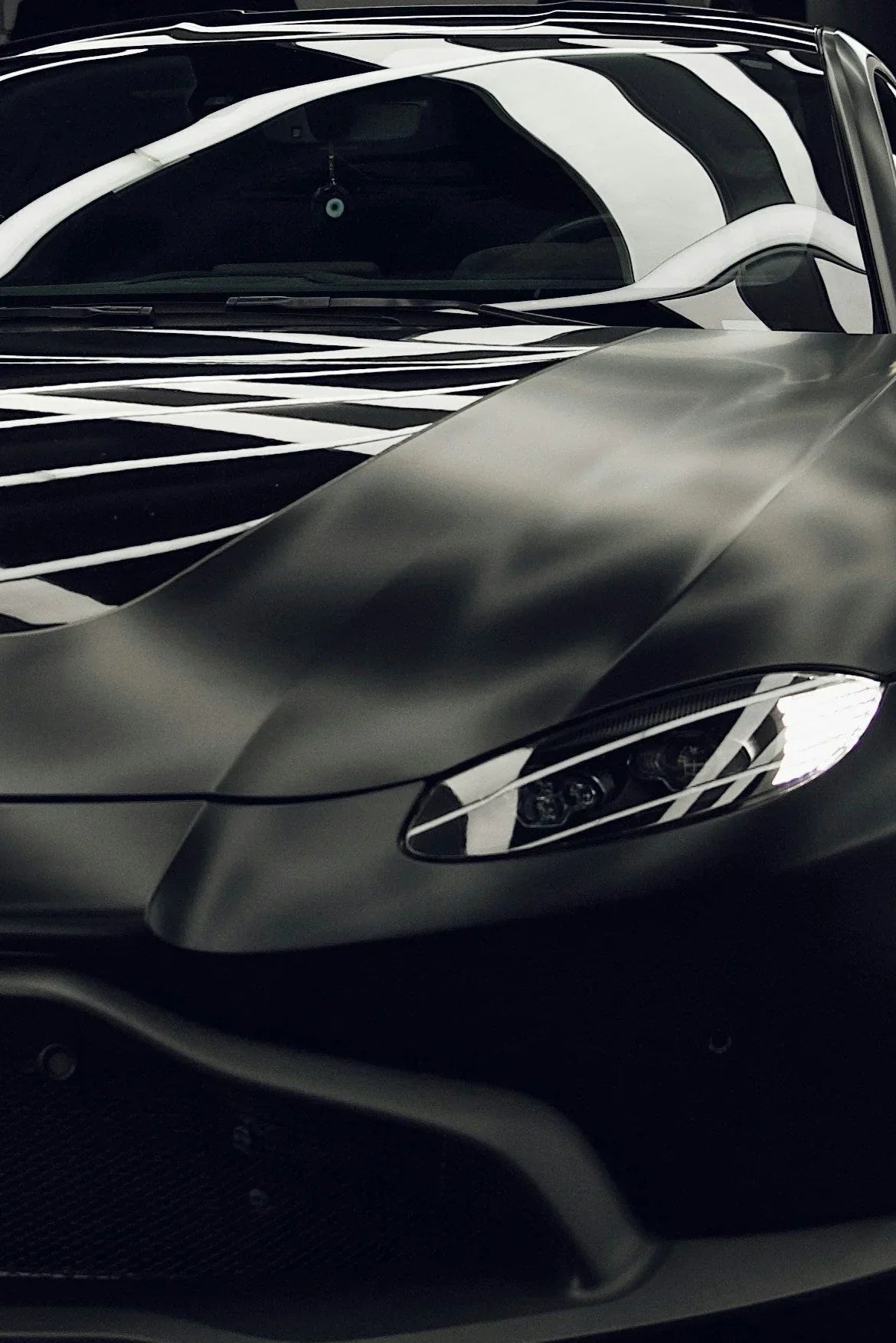
Matte paint looks different. It appears modern, minimalistic, and powerful – which is exactly why many enthusiasts, car collectors, and vehicle manufacturers deliberately choose matte finishes. What many people do not know: this special type of paint requires extremely careful maintenance – and it is absolutely not polishable.
In this article, you will learn why vehicles with matte paint must be treated completely differently from glossy finishes, and why the matte effect is not created by sanding but by the chemical structure of the clear coat.
Why matte paint cannot be polished
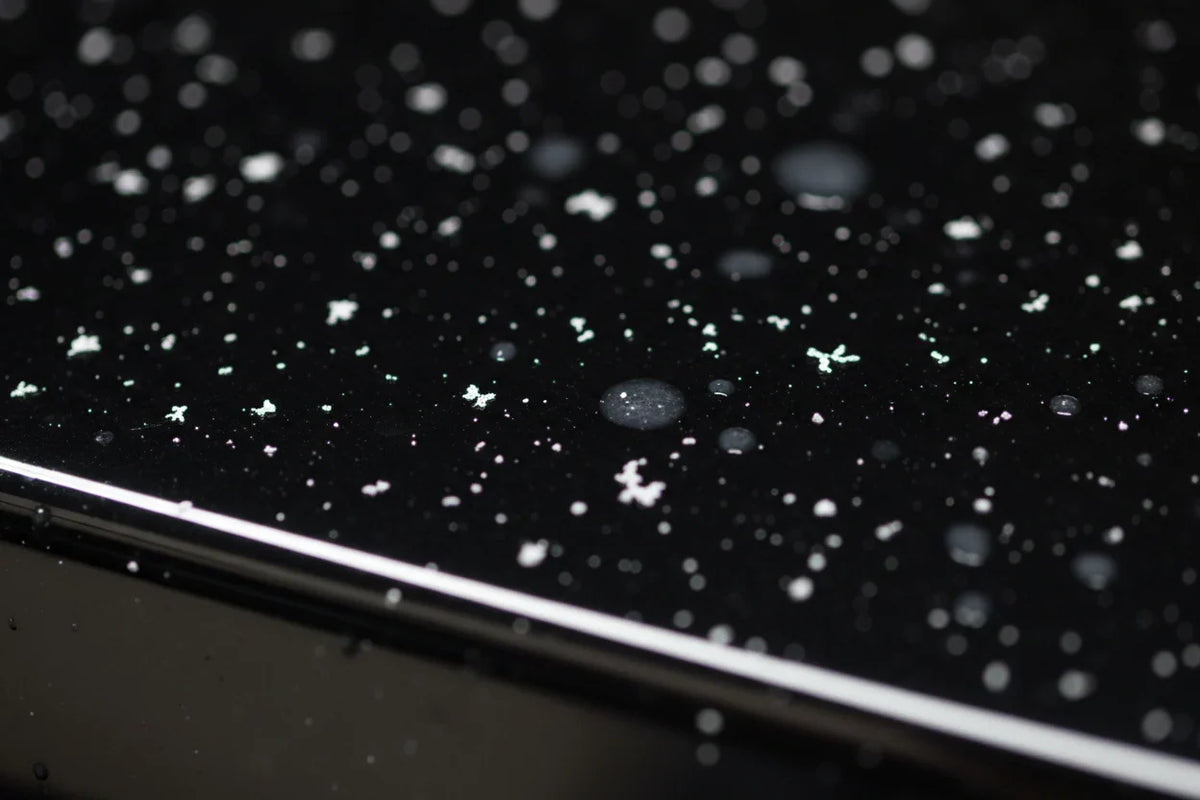
A matte or satin finish is created using a special matte clear coat that forms microscopic irregularities during curing. These tiny structures scatter light – which is why the paint appears matte.
When you polish the surface, you smooth out this microstructure. What remains? A glossy patch – which damages the uniform matte appearance.
Not a mechanical effect, but a chemical structure
Many people believe the matte effect is created through abrasives – this is completely incorrect. The matte clear coat generates the effect during the curing process itself. When you polish, you are working against the paint, not with it.
The only changes that may develop over the years without proper care – caused by UV radiation, acid rain, or aggressive chemicals – do not create an elegant matte finish but rather dull ageing. The result looks patchy and uneven rather than refined.
What happens with scratches?
On glossy paint, a superficial scratch can often be corrected by polishing. Matte paint behaves differently. Even the smallest brightened areas change how light is scattered. Any mechanical correction would create local gloss – leaving a visible mark.
Therefore the rule is: matte paint is not corrected, it is protected.
The correct care for matte surfaces
What matters most is a care routine that cleans without smoothing – and protects without creating shine.
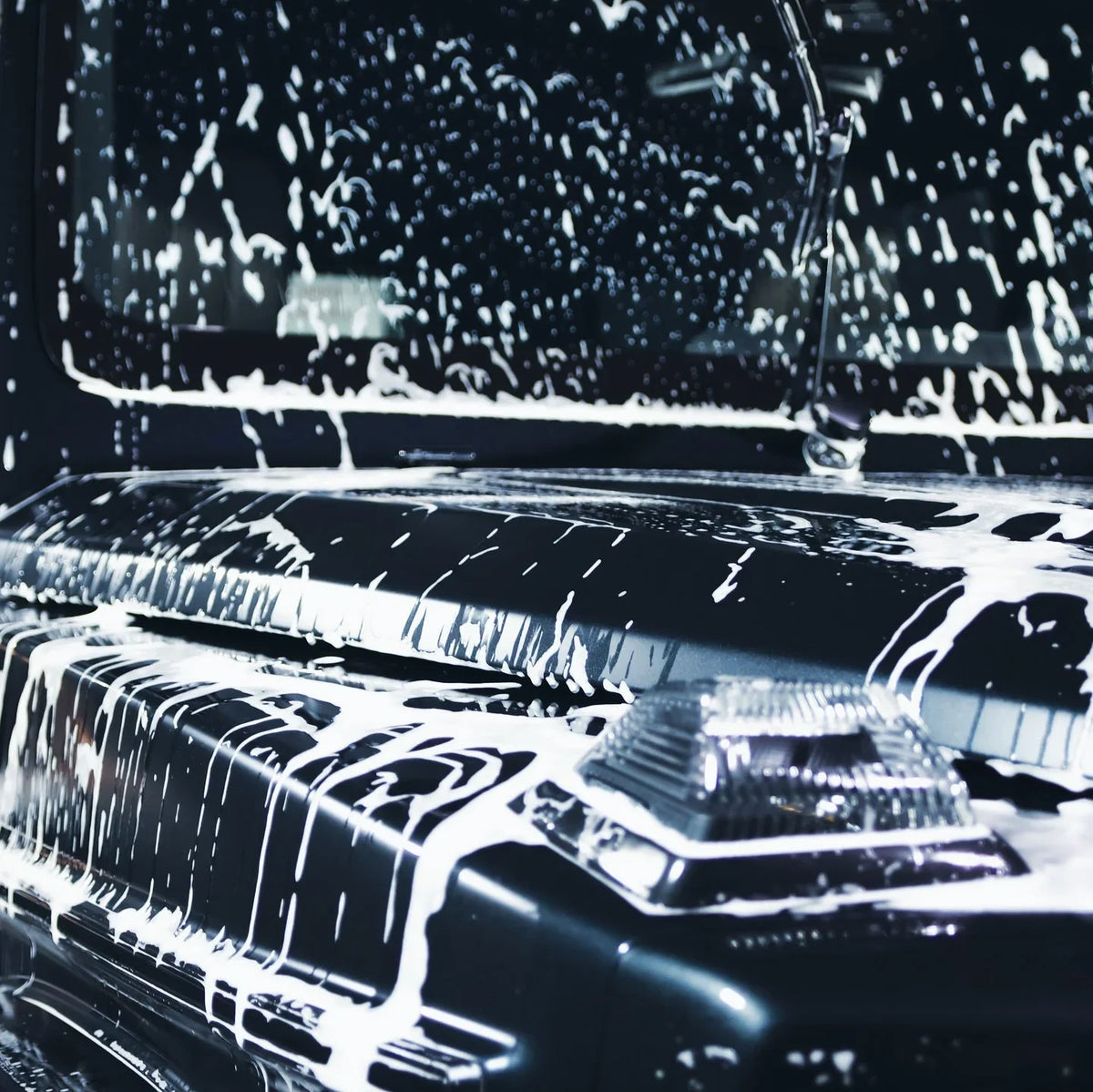
A gentle hand wash using a specially formulated wash concentrate for matte paint removes dirt without leaving gloss enhancers or conditioning residues. Stubborn contamination such as oil, insects, or road grime should be removed with a preparatory cleaner that works without abrasives.
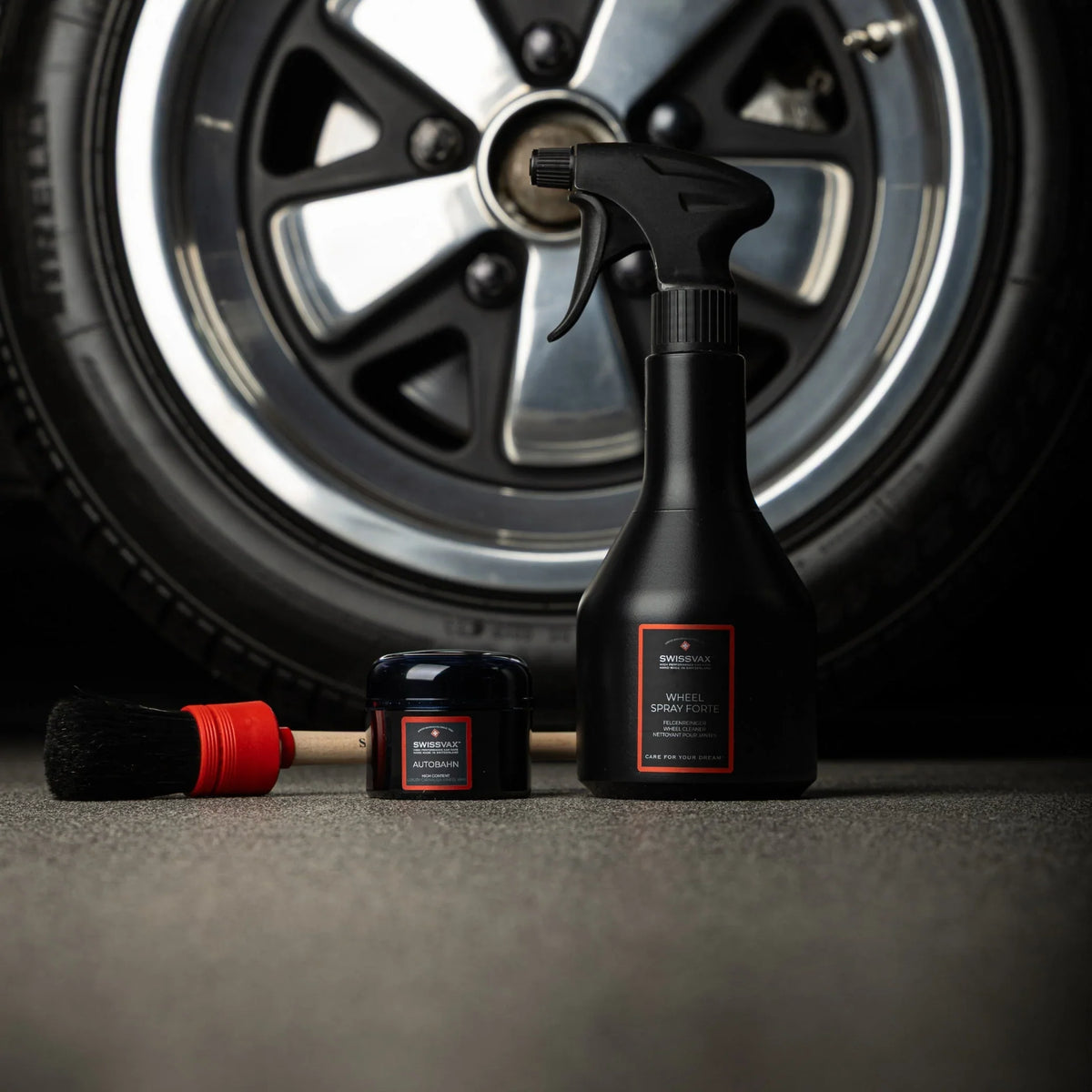
Instead of traditional polishes, specially developed matte waxes or sealants are used. A carnauba wax with an adapted formulation protects the surface without altering the matte effect. In addition, a quick detailer allows sensitive contamination – such as bird droppings or tree sap – to be neutralized immediately before it leaves marks.
The key is not the number of products, but their compatibility with the material.
Professional tips for everyday use
Automatic car washes with brushes or highly alkaline chemicals can brighten matte areas or create partial gloss. Aggressive all-in-one products that claim to clean, polish, and seal at the same time are also unsuitable for matte paint.
Bird droppings should always be removed immediately. Ideally, soften them with a suitable cleaner and then remove them using a lightly damp, soft cloth.
Matte paint requires understanding
Matte paint is not a fashionable effect but a deliberately chosen paint concept. Its appearance is created by a fine surface structure that controls how light is scattered. Once this structure is smoothed, the matte character disappears irreversibly.
Anyone who owns a matte-painted vehicle should not think about correction, but about preservation. Gentle cleaning, structure-preserving protection, and consistent care are the key.
This keeps the surface exactly what it is meant to be:
calm, precise – and uncompromisingly matte.