Which car polish removes scratches best on black paint?
A car polish removes scratches particularly effectively when it is matched to the condition of the paint, contains ultra-fine abrasives and is applied in a material-friendly manner. Black paint in particular reacts sensitively to incorrect polishes, as even the smallest irregularities in light become immediately visible.
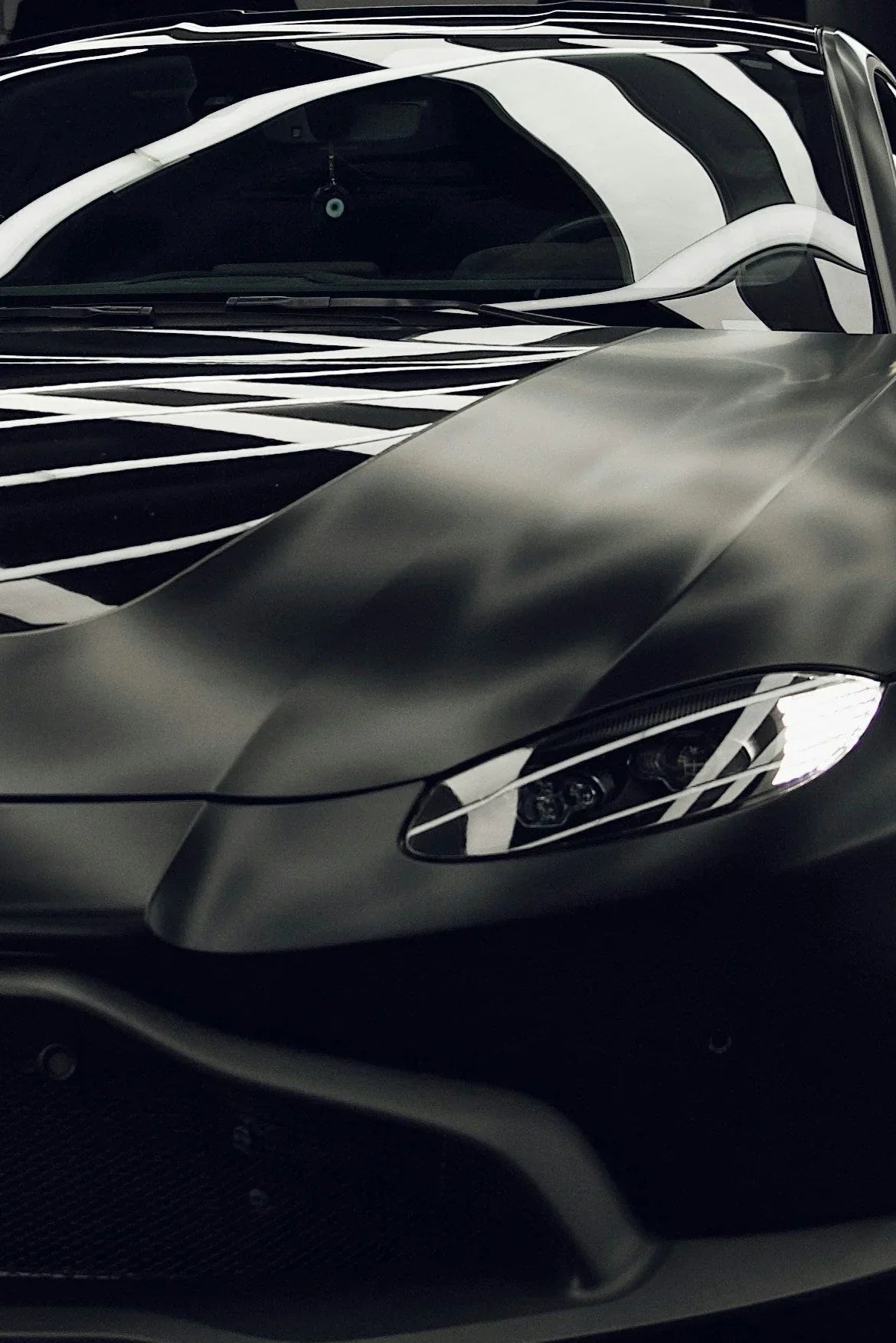
Black reflects light like a mirror and reveals every flaw instantly. That is precisely why choosing the right polish is crucial here.
Why are scratches so visible on black paint?
Black paint is not more delicate than other paints, but it is visually far more demanding.
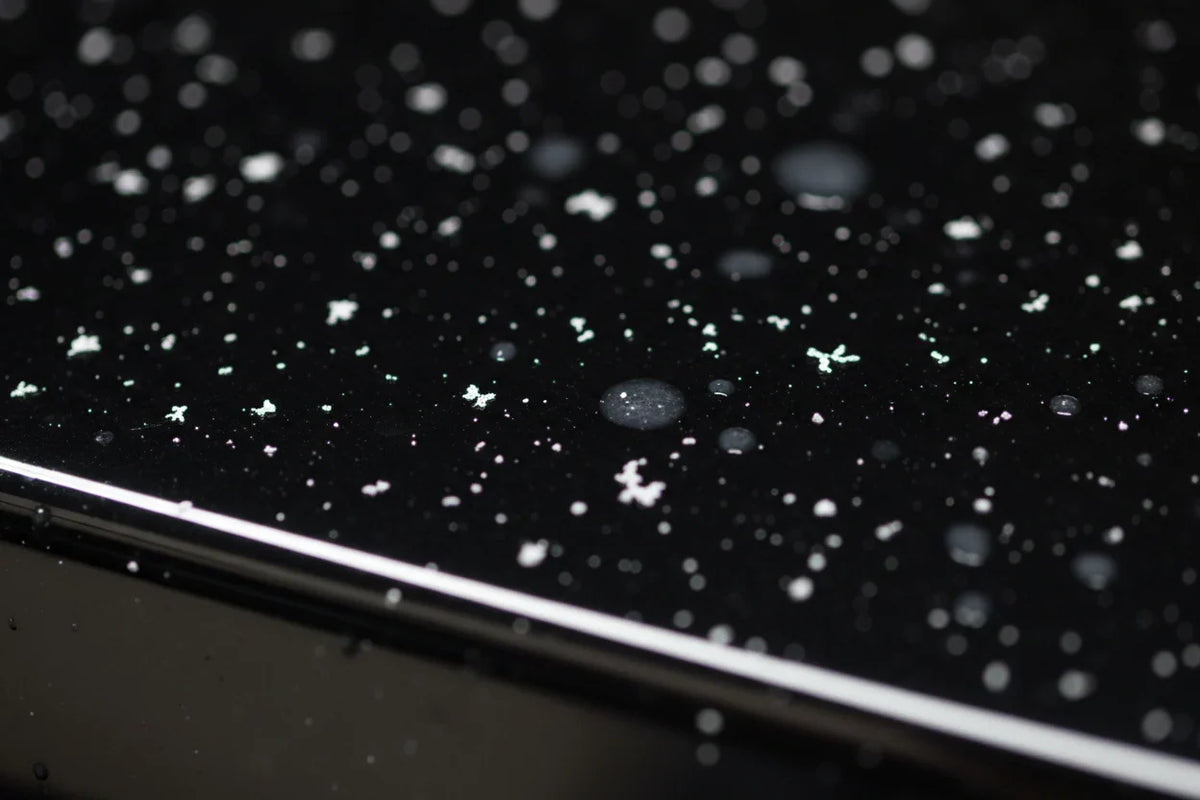
Light is reflected in a more concentrated way on dark surfaces. Even minimal micro-scratches, so-called swirls or holograms, disturb the reflection of light. This results in a dull haze, cloudy reflections or visible polishing marks.
What is barely noticeable on silver or light-colored paint appears immediately disturbing on black or very dark finishes.
What is a car polish and how does it work?
A car polish contains ultra-fine abrasive particles that minimally remove the top layer of clear coat. This:
- Smooths micro-scratches
- Removes oxidation
- Improves light reflection
Important: Every polishing process removes material. Therefore, it should be used in a targeted way and not routinely.
Definition: A polish corrects the paint, it does not protect it from environmental influences or weathering.
What differences are there between car polishes and when should each be used?
If the scratches are only superficial, for example swirls from automatic car washes, or if the paint simply needs refreshing, a fine finishing polish such as SWISSVAX Cleaner Fluid Regular or Regular Professional Polish is generally sufficient.
Characteristics of a suitable polish for black paint:
- Ultra-fine abrasives
- Low abrasiveness
- Hologram-free finish
- Long working time
The rule here: less aggressiveness, more control. Both hand polishes and machine polishes can be used.
What to do in case of deeper scratches?
If the scratch can be felt with a fingernail, a pure finishing polish is not sufficient.
In this case, the following procedure is recommended:
- Start with a medium or strong polish
- Refine afterwards with a finer polish
- Check the surface regularly
- Then apply protection in the form of car wax
Important: Overly aggressive polishes can quickly leave holograms on black paint. We therefore recommend the following product sequence:
- Cleaner Fluid Professional Strong: For dull, heavily scratched or oxidized surfaces
- Cleaner Fluid Professional Medium: For paints with medium scratches
These polishes are coordinated with each other and together form a 2 to 3-stage Cut and Polish System that inspires both professionals and ambitious users alike.
Hand polishing or machine?
If you only want to remove light defects, hand polishing may be sufficient. If larger areas or more severe defects are present, a dual action polishing machine with suitable polishes and pads provides more even and better results.
Rotary machines require experience, especially on dark paints, and should therefore only be used by professional detailers.
Proceed systematically – step by step to gloss
- Wash and prepare: Thorough cleaning, optionally with Paint Rubber
- Pre-polish: Cleaner Fluid Strong for heavily stressed paints
- Fine polish: Cleaner Fluid Medium for uniform gloss build-up
- Finish and protection: Seal with Swissvax Carnauba Wax for lotus effect and showroom appearance
Through the intelligent breakdown of the micro abrasives, polishing initially creates high cutting performance, which then automatically transitions into a fine high-gloss finish. The result: deep-clean, mirror-smooth surfaces without holograms or new micro-scratches.
What should you look for when choosing a high-quality polish?
- No silicones: No wiping with IPA necessary
- No polishing dust: Clean working without post-cleaning
- No washing after polishing: Time savings with professional finish
- Intelligent micro powder technology: 3-stage, 2-stage or one-step polish with depth effect
- Perfect preparation for Carnauba wax: Maximum gloss and long-term protection
Whether applied manually with a cotton applicator or by machine with a polishing pad, polishes such as SWISSVAX Cleaner Fluid Medium or Strong restore even heavily weathered or scratched surfaces to shine. For a particularly fast and effective workflow, the combination of Cleaner Fluid Professional Medium and the blue polishing pad as a one-step polish is recommended.
How important is the polishing pad?
The polishing pad is at least as crucial as the polish itself. It must be matched both to the selected polish and to the respective paint condition.
Rule of thumb: deeper scratches require higher cutting performance, meaning a correspondingly graded polish and a firmer pad.
A common mistake out of caution is using a very soft pad or setting the polishing machine speed too low. In this case, the polish cannot fully develop its cutting effect and the scratches remain visible.
It is equally problematic to apply too much polish to the pad. If the pad becomes saturated, it loses effectiveness and works unevenly. The clear rule is: less product and clean pads that are changed regularly.
A proven practical rule is: one pad per panel, for example one door or one fender. This keeps the cutting performance consistent and the polishing result uniform.
When should you hire a professional?
- If the paint is heavily scratched
- If there is no experience with machines
- If holograms are already visible
- If there is uncertainty about paint thickness
Professional detailers often measure the paint layer thickness before correction to avoid damage.
The right finish – polish alone is not enough
Vehicle care does not end with removing scratches. What is decisive is the subsequent sealing with high-quality car wax. Only this ensures long-term protection of the paint. A premium wax from SWISSVAX not only provides gloss but also nourishes the paint deeply, keeps it supple and protects it sustainably. Water and dirt bead off effortlessly, while the wax layer reliably protects against ultraviolet radiation that can dry out and make the paint brittle.